Okta + Netskope + Third-Party Access: 7 Challenges and How a Zero Trust Enterprise Browser Fills the Gaps (2026)
Okta and Netskope together tackle credential attacks, shadow IT, and risky SaaS, but enforcing least privilege across thousands of apps and unmanaged endpoints is still hard. This post breaks down 7 Okta Netskope integration challenges and why a zero trust enterprise browser for third-party SaaS can help secure contractor access on unmanaged devices.
Combining Okta with Netskope gives organizations identity-driven access control and data security across multi-cloud and SaaS, but third-party and contractor access on unmanaged devices still creates real gaps. Credential attacks, shadow IT, risky SaaS usage, and the sheer scale of enforcing least privilege across thousands of apps and endpoints are persistent challenges. This post walks through seven concrete Okta Netskope integration challenges and explains why a zero trust enterprise browser for third-party SaaS is increasingly part of the answer for securing contractor access to SaaS on unmanaged devices.
1. Enforcing Least Privilege Across Thousands of SaaS Apps and Unmanaged Endpoints
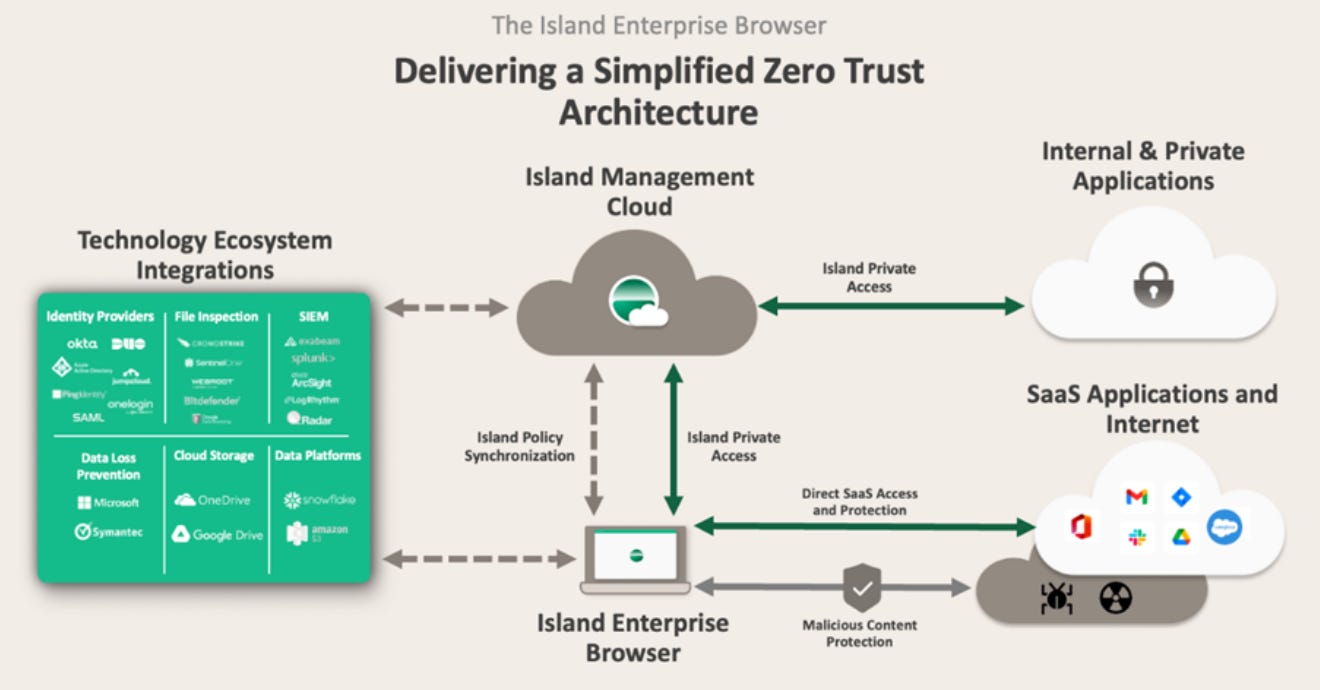
Identity and CASB alone struggle to enforce least privilege at scale when users hit thousands of SaaS apps from unmanaged or BYOD devices. The Okta + Netskope Solution Brief explains how integrating Okta with Netskope enables contextual, policy-driven controls for third-party and BYOD access, but it also highlights the challenge: applying consistent, least-privilege policies across a sprawling SaaS portfolio and endpoints you don’t fully manage. A secure enterprise browser can act as the last-mile control where the session actually runs, closing visibility and policy gaps that identity and network layers can’t reach on unmanaged devices.
2. Credential Attacks, Shadow IT, and Risky SaaS Usage
Login-time MFA isn’t enough when attackers hijack sessions or users adopt unsanctioned apps. The Okta + Netskope partner page describes how the joint solution tackles credential attacks, shadow IT, and risky SaaS usage by combining Okta’s identity-driven policies with Netskope’s visibility and session controls. The challenge is making those controls stick on every session and every app, including ones accessed from contractor or personal devices. Enterprise browsers add session-level enforcement (copy, paste, download, extensions) so that even when identity and CASB are in place, high-risk actions inside SaaS can be blocked or stepped up at the browser.
3. Login-Only MFA Is Insufficient for High-Risk In-Session Actions
Once a user is authenticated, risky behavior inside SaaS, large downloads, sensitive file shares, unusual locations, often goes unchecked. Netskope’s use case on Okta authentication challenge for risky cloud activity shows how Netskope can trigger Okta step-up authentication based on risky in-session behavior, addressing the gap where login-only MFA is insufficient. Using Netskope policies to deliver Okta authentication challenges (video) demonstrates practical patterns for mitigating session hijacking and risky file operations inside SaaS. An enterprise browser can complement this by enforcing in-session policies (e.g., no download, no paste to personal apps) so that high-risk actions are either blocked or forced through step-up before they complete.
4. Flexible Access for Distributed and Third-Party Users Without Losing Control
Businesses need to give contractors and distributed teams flexible SaaS access without exposing sensitive data. The Okta + Netskope video on flexibility while protecting enterprise apps and assets discusses the tension between enabling that flexibility and maintaining control over data, especially for third-party and remote users. Securing contractor access to SaaS on unmanaged devices often requires a control point that doesn’t depend on corporate-managed endpoints; a zero trust enterprise browser provides that by isolating the work session and applying policy at the browser layer regardless of device ownership.

5. Securing Okta Itself: Admin APIs, Trusted IPs, and Break-Glass
Okta is a high-value target; protecting the IdP is as important as protecting the apps behind it. A multi-phased approach to securing Okta using Netskope uses the Okta HAR-file breach as a case study and explores challenges such as protecting administrative APIs, restricting Okta and SaaS access to trusted Netskope IPs, and handling break-glass access. Restricting access to Okta (and critical SaaS) from known, managed paths, including enterprise-browser-originated traffic, reduces the attack surface when contractors or unmanaged devices need access.
6. Contractor Access to Okta, Device Classification, and IP-Based Restrictions
Contractors often need access to Okta and SaaS from devices that aren’t fully managed. Netskope client enforcement for secure access to SaaS addresses contractor access to Okta, device classification, and enforcing IP-based restrictions for SaaS via Netskope and identity-provider policies. An enterprise browser can simplify device classification and policy enforcement: when contractors use a managed browser profile, the organization gains a consistent “client” to apply ZTNA, DLP, and session controls without deploying full device management.
7. Session Isolation and Real-Time Policy Without Full-Tunnel VPN
Traditional approaches often rely on full-tunnel VPN or heavy agents, which hurt UX and don’t map well to “anything to anywhere” SaaS access. Securing applications and data using Netskope One Enterprise Browser explains how an enterprise browser secures private and SaaS apps by isolating only the session, applying granular real-time policies, and avoiding full-tunnel VPN complexity. The IJCA 2025 paper on secure enterprise browsers frames the browser as the “last-mile” zero-trust control, highlighting unmanaged devices, lack of visibility into browser behavior, and gaps left by traditional SWG/CASB. Together, Okta + Netskope + an enterprise browser cover identity, network/data, and session, without forcing every contractor onto VPN or VDI.
Why Consumer Browsers Create Risk for SaaS and Third-Party Access
Consumer browsers are a major source of SaaS risk. How to close critical gaps with secure enterprise browsers (SHI) notes that a large majority of organizations see browser-originated incidents, with data leakage and session hijacking in SaaS-heavy, BYOD environments. Browser security taking center stage and Cisco’s Secure Access data sheet (SSE with enterprise browser) describe market momentum for enterprise browsers and the problem of fragmented controls across ZTNA, SWG, and CASB when securing “anything to anywhere” access. Cisco’s Chrome Enterprise Browser integration for zero trust documents operational challenges, third-party integrations, policy consistency, device management, that teams face when folding the browser into secure access. For Okta Netskope integration challenges involving contractors and unmanaged devices, adding a managed browser layer reduces reliance on consumer browsers and closes these gaps.
SaaS and Third-Party Risk: OAuth Sprawl and Weak Governance
Third-party SaaS and user-connected apps amplify risk when governance is weak. Top 7 trends shaping SaaS security (The Hacker News) highlights increased reliance on third-party SaaS and user-connected apps, with challenges like unchecked OAuth app sprawl and weak governance over external integrations. Okta and Netskope help with identity and data policies, but controlling which OAuth apps can run inside the browser and what they can do with session data is where an enterprise browser adds value, especially for contractor and BYOD scenarios.
Where a Zero Trust Enterprise Browser Fits With Okta and Netskope
A zero trust enterprise browser for third-party SaaS doesn’t replace Okta or Netskope; it adds a session-level control that:
- Enforces least privilege and DLP inside the browser (copy, paste, download, print, extensions) without full device management.
- Provides a consistent, classifiable “client” for contractor and BYOD access so Netskope and Okta policies can be applied with higher confidence.
- Reduces exposure from consumer browsers (data leakage, session hijacking, OAuth abuse) while avoiding full-tunnel VPN and heavy VDI.
- Enables step-up and in-session controls that complement Okta authentication challenges and Netskope session policies.
For organizations already using or evaluating Okta + Netskope, adding an enterprise browser is a practical next step for securing contractor access to SaaS on unmanaged devices and closing the gaps that identity and CASB alone can’t fully address.
Conclusion
Okta Netskope integration challenges, least privilege at scale, credential and session risk, shadow IT, contractor and BYOD access, are well documented. Combining Okta’s identity with Netskope’s visibility and session controls moves the needle, but unmanaged endpoints and browser-level risk remain. A zero trust enterprise browser for third-party SaaS fills that last mile: session isolation, real-time policy, and a manageable client for contractors and unmanaged devices without VPN or VDI overhead. Together, Okta + Netskope + an enterprise browser give a clearer path to comprehensive access control and data security in multi-cloud, third-party-heavy environments in 2026.
To explore how an enterprise browser complements Okta and Netskope for contractor and third-party access, see Oasis Enterprise Browser and Zero Trust Security.
Ready to Elevate Your Work Experience?
We'd love to understand your unique challenges and explore how our solutions can help you achieve a more fluid way of working now and in the future. Let's discuss your specific needs and see how we can work together to create a more elegant future of work.
Contact us
